

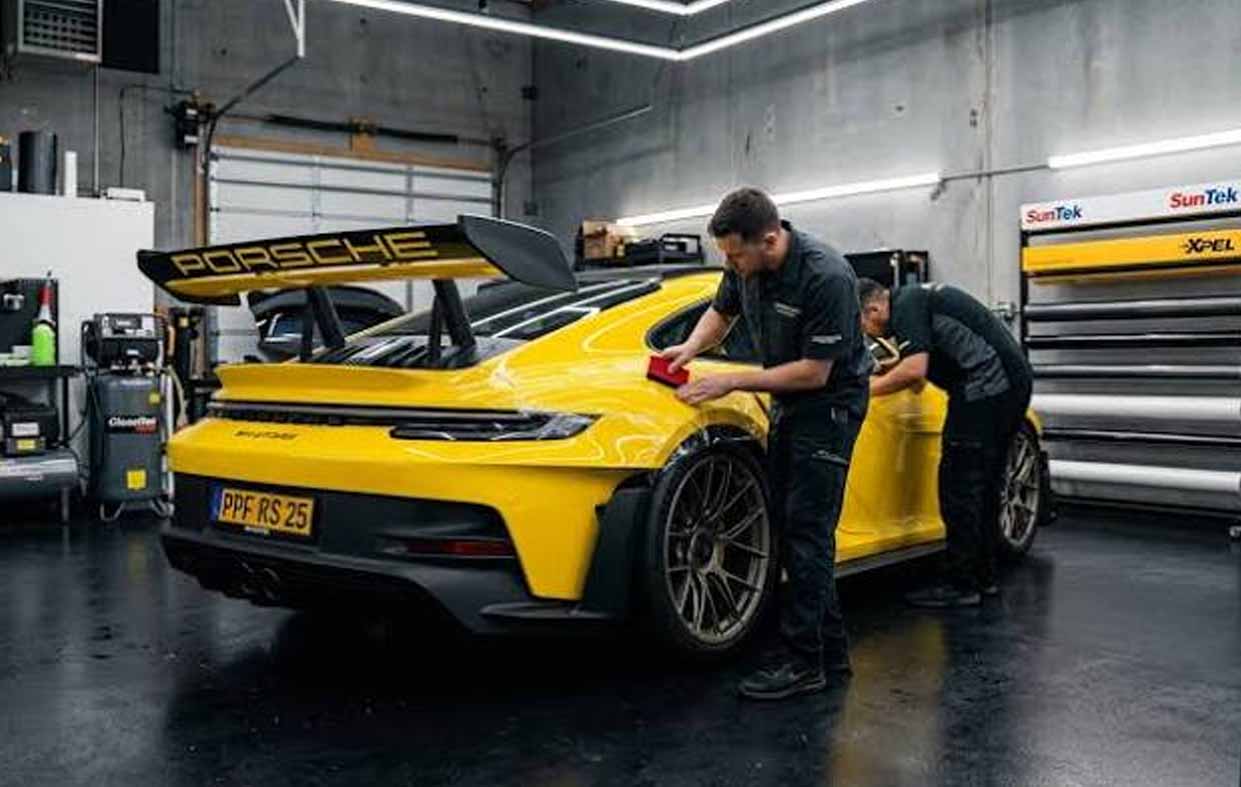
Auto Detailing Shop
Car Film OEM & Private Label Solutions for Auto Detailing Shops
For auto detailing and wrap shops, relying on third-party brands can limit your profit margins and hold you back from building your own brand equity. Transitioning to an OEM (Original Equipment Manufacturer) or Private Label solution allows you to source premium-grade film directly from top manufacturers, package it under your own brand name, and maximize your business’s profitability.
Key OEM Product Options
When establishing an OEM relationship, you can customize and private-label two core product lines:
1. Paint Protection Film (PPF)
Offering your own branded PPF establishes high-end authority. Top-tier OEM manufacturers provide customizable roll sizes and specifications:
- TPU (Thermoplastic Polyurethane): The industry standard for high-end shops. You can specify properties like hydrophobic topcoats, advanced instant self-healing (repaired by heat), and enhanced UV resistance.
- Finishes: Choose from standard high-gloss, stealth matte, satin, or even infused colored PPF.
- Custom Thicknesses: Specify film thickness (typically ranging from 7.5 mil to 10 mil for heavy-duty protection) to balance ease of installation with impact resistance.
2. Nano-Ceramic Window Tint
Private-labeled window film gives you a high-margin upsell opportunity for daily-driver vehicles.
- High IR Rejection: Request formulation for 95% to 99% Infrared Rejection (IRR) to deliver noticeable heat block performance that rivals major national brands.
- Shade Variety (VLT): Stock consistent master rolls with VLT options ranging from dark 5% limousine tint to 70% ultra-clear windshield protection.
- Material Customization: Opt for purely non-conductive, signal-friendly nano-ceramic structures that block UV rays without interfering with car electronics.
The Benefits of Going OEM / Private Label
- Higher Profit Margins: Sourcing master rolls directly from a factory eliminates distributor markups, significantly lowering your cost per vehicle installation.
- Brand Authority: Instead of marketing another manufacturer’s name, every roll of film applied in your shop advertises your shop’s brand, complete with customized box designs, release liners, and logo printing.
- Exclusive Regional Control: Unlike carrying public brands that any competitor down the street can buy, your custom-branded film is completely exclusive to your shop.
- Custom Formulations: Some factories allow you to specify adhesive tack levels (low-tack for easy repositioning versus high-tack for difficult edges) and film flexibility to match your installers’ preferences.
Comparison of Sourcing Methods
| Business Aspect | Buying Name-Brand (e.g., XPEL, SunTek) | Private Label / OEM Sourcing |
|---|---|---|
| Upfront Cost | Low (buy roll-by-roll as needed) | Moderate (requires Minimum Order Quantities / MOQ) |
| Profit Margins | Moderate (subject to fixed wholesale pricing) | Very High (factory-direct pricing) |
| Brand Equity | Builds the manufacturer’s brand | Builds your local/national brand |
| Control Over Specs | None (standardized off-the-shelf products) | High (can customize adhesive, thickness, and coatings) |
| Marketing Support | Provided by the manufacturer | Self-managed (requires custom packaging and boxes) |
How to Get Started with OEM?
- Define Your Specs & MOQs: Identify your highest-volume products. Most OEM factories require a minimum order (e.g., 10 to 50 master rolls of window film or 5 to 10 rolls of PPF) to begin custom packaging.
- Request “White Box” Samples: Before signing an OEM agreement, always request unbranded sample rolls. Have your lead installers test the film’s shrinkage, tack, clarity, and stretchability.
- Design Your Brand Packaging: Work with the manufacturer to design custom-branded boxes, protective end-caps, and branded release liners.
Get a Quote
Send an inquiry and receive a response within 24 hours.
- Phone:
- +86 13714437612
- Whatsapp:
- +86 13714437612
- Email:
- kim@nasido.com